Kabirat Olokunde, a Nigerian migrant worker, planned to spend her birthday with friends in the city of Abu Dhabi. Instead, she turned 28 in a frigid prison cell, one of about 700 Africans imprisoned by Emirati authorities without charge.
In unparalleled mass arrests, the workers were jailed with "no legal justification" on the night of June 24-25, and later started being deported, said ImpACT International for Human Rights Policies and the Euro-Mediterranean Human Rights Monitor.
UAE flag flies over a boat at Dubai Marina, Dubai, United Arab Emirates May 22, 2015.REUTERS/Ahmed Jadallah "I celebrated my birthday in chains, with no mattress," Olokunde told Thomson Reuters Foundation by phone from the Lagos, Nigeria, where she was deported on August 3.
"I still have the trauma in me," added the single mother, who had been working as a bus attendant and caretaker at an international school in Abu Dhabi.
She was deported without access to her belongings, and is now jobless and unable to support her son, siblings and parents.
The Abu Dhabi government communications office, and the Nigerian embassy in Abu Dhabi, did not immediately respond to requests for comment on the rights groups' report, published on Thursday.
The Gulf monarchy, a regional trade and tourism hub and one of seven emirates which form the United Arab Emirates (UAE), tolerates little criticism.
Human rights groups have previously documented the imprisonment of hundreds of activists, academics and lawyers in the UAE, often following unfair trials on vague charges. The UAE has dismissed those accusations as false and unsubstantiated.
The UAE is home to nearly 10 million people, more than 80% of whom are expatriates who send remittances home to their families, according to the United Nations.
Workers from developing countries often live in shared residencies in Abu Dhabi with separate wings for different nationalities, like La Gym, where Olokunde was arrested. African and Asian workers have highlighted stigmatisation and racism in the past, but the two rights groups said the June raid was a marked escalation.
"The scale of this racially motivated deportation is completely unprecedented," said Michela Pugliese, a migration researcher at Euro-Med Monitor.
"The victims and other migrants who aspire to work safely in the UAE have had this right unjustly revoked. Its consequences will be felt for years to come."
The investigation, based on interviews with more than 100 migrant workers, found that Abu Dhabi's Rapid Intervention Forces (SWAT), Criminal Investigation Department and police carried out mass arrests in at least four apartment buildings.
The subsequent forced deportations were illegal, Pugliese said, as many of the workers had valid residency permits and work visas and were denied due process or access to their personal property.
About 100 individuals remain in detention, and more African workers have been arrested in recent weeks, Pugliese added.
The two human rights groups said they sought clarification from the UAE interior ministry on the reasons behind the arrests and deportations, but received no response.
Migrant workers told researchers that the arresting units used excessive force against them, including stun guns, and touched women's bodies inappropriately.
Olokunde said she was arrested in shorts and a bra, and was not allowed to dress before being transported to the jail.
When she and other women went on a hunger strike to demand justification for their arrest, they were chained for seven days, including her birthday, Olokunde said.
Two workers who spoke to the Thomson Reuters Foundation said they slept on the floor in large, group cells, but were not given masks to protect against COVID-19 infection.
In jail, the report said, detainees were denied access to health care and sanitary pads while women had their periods.
The rights groups said detainees were not granted access to lawyers or told why they had been arrested - but some were indirectly accused of prostitution, which is a crime in the UAE.
During her single, brief interrogation, Olokunde said she was asked, "How much do you charge for a massage?" According to Human Rights Watch (HRW), migrants are entitled to challenge their arrest in their country of residence.
"The abuses outlined demonstrate that migrants have had their rights to due process violated, and their detention conditions could amount to ill-treatment," said Rothna Begum, HRW's women's rights researcher in the Middle East.
"It is horrific that the UAE authorities appear to be conducting a secret campaign of mass arrests of African migrants, without any clear legal basis for such arrests or detention," she added.
Kenneth Rubangakene, a 31-year-old Ugandan clerk who had lived in Abu Dhabi since 2017, also said he was taken from his La Gym apartment to prison.
He said guards scanned his fingerprints and retinas without explanation, chained his hands and feet for three days, and imitated the sound of a couple having sex, asking if he had ever heard that noise at La Gym.
"They told us Africans are spoiling their country, they want to get rid of Africans from the street, we Africans are stupid," he said.
He was deported from Dubai International Airport on July 29, according to a printed booking confirmation that Rubangakene shared with the Thomson Reuters Foundation, which he said was given to him by prison guards.
"It was so shameful at the airport. You are arriving in a prison uniform, in prison sandals," he said.
The Ugandan embassy in Abu Dhabi did not immediately respond to a request for comment.
Rubangakene said he has about 6,000 dirham ($1,634) stuck in a bank account in the UAE that he cannot access, as his bankcard - along with teaching certifications he would need to apply for new jobs - all remained in his room.
"I came back with nothing. I'm starting from zero," he said.
Human RightsNewsAddThis : Original Author : SaharaReporters, New York Disable advertisements :
Two graduates of Osun State University (UNIOSUN) have been killed in an accident on the Lokoja-Abuja Road.
It was learnt that two others sustained injuries in the accident the graduates had on their way to report at the National Youth Service Corps (NYSC) camps in Kaduna and Kano states.
A 21-day orientation course in camps across the country is part of the requirements for graduates to fulfil to partake in the mandatory one-year service to Nigeria.
It was gathered that three of the graduates were posted on Wednesday by the NYSC to Kaduna State while one was posted to Kano, to undergo the orientation course, when the crash occurred.
The Public Relations Officer of the University, Ademola Adesoji, told The Punch that immediately the accident occurred on Wednesday, the survivor contacted the institution.
“And we immediately informed the management of National Youth Service Corps Scheme.
"Four of our ex students were involved. Three of them are male and one female. Two died in the accident. But we spoke with the two that survived and monitored their movement up to hospital.
"Our Students Affairs Unit also notified the NYSC leadership and the management of the scheme responded immediately. The two that died were heading to Kaduna NYSC Orientation Camp. The four of them travelled in a vehicle they hired from Osogbo," he said.
Adesoji expressed his condolences to the families of the deceased on behalf of the university management.
InsecurityNewsAddThis : Original Author : SaharaReporters, New York Disable advertisements :
A former United States Ambassador to Nigeria, John Campbell has expressed fear that the recently acquired Super Tucano fighter jets may be hijacked by bandits and terrorists.
Mr Campbell relates his prediction to the fall of the Afghanistan government and the takeover of similar high-grade military jet fighter by the Talibans.
The Afghan government had also acquired 23 Super Tucanos from US to combat the Talibans but with the collapse of the Afghan government and the fall of Kabul, not all of the aircraft have been accounted for. Some Afghan pilots flew their planes out of the country. However, at least one Super Tucano is now in the hands of the Taliban.
Mr Campbell who wrote for CFR, explained the instances of how terrorist groups seized other military equipment in Nigeria, expressing worries on whether the aircraft will be used to combat terrorism or used against other targets such as the Biafran agitators or Delta militants.
“Though it seems unlikely at present, there is also the potential that a Super Tucano could fall into the hands of a jihadi terrorist group.
“Now that the Super Tucanos are part of the Nigerian Air Force, an issue will be how they are used. Will they be used only against jihadi terrorists in the North, or will there be the temptation to use them against other targets, such as Biafran separatists, Delta militants, or even cattle rustlers? Broader use increases the potential for civilian casualties.
“A Biafran separatist movement, the Indigenous People of Biafra (IPOB), is suing to block the sale in a Washington, D.C. court,” he said.
Nigeria separatist group Indigenous People of Biafra (IPOB) had sued U.S. Secretary of State Antony Blinken and Defense Secretary Lloyd Austin over the sale of attack planes.
IPOB said the Nigerian government will use the warplanes to attack its supporters.
Also some critics, human rights groups and some members of the U.S. Congress had opposed the sale of the aircraft to Nigeria, citing the constant abuse of human rights by the regime of Muhammadu Buhari.
NAF officially inducted the six A-29 Super Tucano fighter jets on Tuesday, to aid its fight against insecurity in the country. Nigeria was said to have purchased the A-29s at about $500 million through Foreign Military Sales (FMS) programme. The American embassy in Abuja had described it as the largest sale in sub-Saharan Africa.
During the induction ceremony of the Super Tucano jets where journalists were denied entrance, U.S. Department of Defence leaders who were also present said that the “aircraft will assist the Nigerian Air Force in their fight against violent extremist organisations including the Islamic State West Africa Province.”
U.S. is providing $36.1 million in infrastructure as support at the Kanji Air Base, where the Super Tucanos will be housed a statement by the embassy disclosed.
No few than 64 Nigerian pilots have been trained at an American air force base on how to handle the aircraft.
InsurgencyTerrorismNewsAddThis : Original Author : SaharaReporters, New York Disable advertisements :
Years of coal mining in some communities in Enugu State and attendant negligence of those mining sites are now leading to dangerous environmental degradation that threatens those communities. In this report, Ben Aroh, who visited Enugu North, Udi and Ezeagu local government areas of Enugu State where the mines are located, captures the fears of the residents and threats posed by the abandoned coal mines.
Mr Onoh's house located between colliery and Amuzam mines.
‘We are sandwiched by landslides’
Anthony Onoh and his family are marking time—their only home, sandwiched by abandoned mines, may sooner than later be swallowed by the mines. When it will happen is what they don’t know.
Onoh’s home is situated between Amuzam and Colliery, both at Ngwo in Enugu North Local Government Area, Southeast Nigeria, where the defunct Nigerian Coal Corporation (NCC) had mined coal. Coal mining in Enugu started in 1916, eight years after coal was discovered, and long before Nigeria made a discovery of crude oil in commercial quantity at Oloibiri in 1956 in the present-day Bayelsa State.
The house, Onoh says, is showing signs that its days are numbered, but he and his nuclear family has nowhere to relocate. “We live here because we don’t have options. We access our house through impassable routes. The foundation of our building is cracking and falling off. Surely, it will fall if nothing is urgently done to remedy the situation,” he said.
“By our right is the abandoned Colliery mine,” he continued. “Behind us is the Amuzam site. We can’t farm here anymore. There are no more sources of livelihood here. When we built this house, the gully was not spreading with this pace.”
Mercy, Anthony Onoh’s wife, says they see every day as the last for their house because the approaching erosion occasioned by the abandoned coal mines recently pulled down the perimetre fence of the house.
“A few days ago, the remaining part of our fence fell down,” Mercy Onoh said. “Our cries have not been listened to at all. Some property owners around here left many years ago because of the dangers therein. You wake up and see that a part of your house has collapsed.
“You can see that we are surrounded by gullies. Environmental officials have been coming. Some said they came from Abuja. But nothing much has been done. The Enugu State government is trying, but the speed this gully is spreading demands more action.”
Like Onoh’s family house, a worship centre, Rivers of Life Int. Mission Centre, sited near the Colliery landslide, is also waiting to be consumed by the threatening gully erosion. “The fear is that the gully is expanding daily without the corresponding intervention. If nothing is done urgently, this church may be pulled down. This is not our prayer,” says a member of the centre who identified himself as Nnamdi.
Coal mines abandoned after civil war
When it was discovered, Nigerian coal was exported to neighbouring Ghana, United Kingdom, Egypt and South Africa. But the production was crippled by the discovery of other sources of energy, Nigerian Civil War, and unsuccessful privatization attempts. “Nigeria Civil War negatively impacted on coal production,” the Nigerian Tourism Board was quoted in a report.
Coal Camp, Enugu State.
Following the war, production never completely recovered and coal production levels were erratic. Attempts at mechanizing production ended badly, as both the implementation and maintenance of imported mining equipment proved troublesome. It adversely affected production. After the civil war, the Nigerian coal industry has not been able to return to its peak production of the 1950s, the tourism board stated.
Several privatization attempts−to salvage the coal mining sector−including the one by former President Olusegun Obasanjo in 1999 up until 2004, did not bring back the fortunes of the once-flourishing industry. All these, including the selling-off of its assets by the NCC to settle debts owed its staff members, meant that the mines were forever abandoned.
The abandoned mines are now threatening human existence; and residents of the affected areas are helpless. “It is pathetic that we have been abandoned since coal became less fancied in this country,” Mr Onoh said. “My father told me that our area was a centre of attraction during the coal exploration. Thousands of people earned their living here.”
Gully leading to Coal camp
‘Flood washed away our relatives, homes before government’s interventions’
Amuzam, one of the abandoned coal mines, is littered with relics of collapsed buildings. Residents say the once-lively community could have gone into extinction because of the coal mines, but for the reclamation by the Enugu State government and the World Bank.
“You can see many collapsed storey-buildings. Some people also lost their lives. I recall a few that were swept by floods. Some of their corpses were never recovered. The outcry forced government’s intervention,” a resident, Paulinus Ossai, told our correspondent. He added that, “Without the reclamation done by the state government in collaboration with the World Bank, Amuzam would have gone into extinction.
Collapsed building at Amuzam
“The construction company did a good job in filling the gullies. But many affected areas are yet to be covered.”
Communal efforts to reclaim their lands yielded little or no result, says John Enwu, a community leader. Their farmlands have equally been taken over by the environmental degradation that the abandoned coal mines have brought.
“Our farmlands and residential buildings were destroyed before this reclamation,” Enwu told our correspondent. “Another community which this ecological problem has adversely affected is Umueze-Asata, where farmlands have been washed away and getting very close to residential buildings.”
James Eze who lives in the same community shares his experience: “We tried all that we could. The erosion has gone beyond our local efforts. We dig holes just to slow down water pressures and water currents. We also fill bags of cement with sands just to hedge it off, but the water pressure is always too much.”
At Okpuno-Nsude in Udi Local Government Area where Okpara mines are located, residents live in constant fear during rainy seasons. Unlike Amuzam, the intervention at Okpuno-Nsude is still in the pipeline.
This hitherto agrarian community has become a ghost of itself as the landslides spread meteorically. The natives adopt various erosion-control measures to curtail it, but it keeps spreading. “We are worried that the underground tunnels that have been there for many years may cave in one day,” Sheddy Ozoene, a native of the village, said.
Titus Ozoani, another villager, corroborates Ozoene and said they live in fear. “We live in fear every day. Through communal efforts, we plant bamboo trees to ameliorate the situation. Although it curbs the excesses, a lot need to be done,” he told our reporter.
Bamboo trees planted in gullies to check erosion expansion at Okpuno Nsude
“There was a time the authorities of the World Bank came to supervise it. Ever since then, we have remained expectant. They are yet to return again. This erosion has killed our farming activities. The effect is devastating,” he said.
At the moment, the state government, under the Enugu State-Nigeria Erosion and Watershed Management Project (NEWMAP), a World Bank assisted project, is carrying out reclamation, channelling, and remediation at Colliery gully erosion site. It is being handled by Anbeez Services Ltd. The work at Amuzam gully site was also carried out by the same company.
Walking in the shadow of death
Seven communities under Agbaja cultural zone−Nsude, Obioma, Amuzam, Nachi, Eke, 9th Mile, and Ngwo−all with abandoned coal mines, have an undetermined and dangerous hollow beneath them.
Leaders of the areas, known as Agbaja Leaders of Thought, engaged the services of environmentalists and geologists. They say they were told that there are danger zones that could cave in like earthquake. They are demanding the mining maps to determine these red zones.
Agu Gab Agu, a professor of law and secretary of the group, says the mines were shut hurriedly without due processes. Agu blamed the Nigerian government for failing to do the right thing in reclaiming the affected areas at the time the coals were shut down.
“These mines were shut hurriedly without due processes,” he said. “Usually, when mines are being closed, there should be props or trees to hold the openings in the bowel of the earth. They are large openings that when they start to cave in, they will bring down everything on their top.
“The mines travel many kilometres, as far as Ebe, Obioma, and Nachi. So we are on top of them without knowing that the underneath is hollow. Some communities, like Nsude, will soon cave in.”
They are apprehensive of what could happen soon. So they are seeking to have the map of the area. “We have commissioned some work by environmentalists and geologists on that,” Agu says. “Our query is that those who did this thing should give us the maps. We want to know the danger zones.
“Nobody can discountenance that the problem of Ugwu Onyeama may be part of this development. If it passed through 9th Mile, with the ongoing development there, it means that one day, it will just go down. Most of those lands may not be useful to the owners again. They ought to be restituted.”
Nigerian Mining Act 2007, although does not specify the penalties for non-reclamation of mined areas, is explicit in ensuring standard practices at mine zones, particularly by those who worked on the mines.
Chapter Four of the Act, entitled ‘Environmental Considerations and Rights of Host Communities, states that, “The minister shall by order require the grantee of a mining lease to restore any area in respect of which mining operation has been, is being, or is to be carried out, on or after the date on which this Act comes into operation.
“Where land which is subject of a mining lease has been exploited, the reclamation of mined-out areas shall be restored by the applicant under the condition of its grant, otherwise the relevant provision of section 10 of this Act shall apply.”
Government Interventions
Barr Vincent Egechukwu Obetta, project coordinator of Enugu State-NEWMAP, revealed that, “The project intervention on the erosion areas in Ngwo communities has commenced with the award of contracts for the six sites.”
However, for that of Ugwuto-Nsude, the project was successfully handed over on October 2018, on completion, to the host community, Obetta further said.
Investigations by this newspaper show that intervention work is ongoing at four fingers of the abandoned mines located at Isata, Colliery, St Theresa’s and Amuzam, although at a snail’s pace.
This, according to findings, is a result of paucity of funds towards the counterpart funding scheme. “The reclamation of Amuzam and ongoing works at some other affected sites of the landslides show that Gov Ifeanyi Ugwuanyi has not forgotten these areas,” a local source who did not want to be named said.
A publication of Enugu State-Nigeria Erosion and Watershed Management Project shows that former governor Sullivan Chime paid a counterpart fund of N30 million and another N30 million in 2013, and later approved N200 million in 2014 for NEWMAP projects as counterpart funds with the World Bank.
– This story was produced in partnership with Civic Media Lab under its Grassroots News Project
NewsReportsAddThis : Original Author : Ben Aroh Disable advertisements :
The court-ordered routine visit of the lawyers representing the leader of the Indigenous People of Biafra (IPOB), Nnamdi Kanu took another dimension as the operatives of the Department of State Services (DSS) prevented them from seeing him yesterday.
According to a statement issued by Kanu’s lead counsel, Ifeanyi Ejiofor and obtained by SaharaReporters on Friday, the DSS said "that the person assigned to receive us during yesterday's visit was on a special assignment.” Nnamdi Kanu Ejiofor stated that he was in the secret police’s office with a constitutional lawyer from the United States (US), Bruce Fein, but they were prevented from seeing the separatist leader despite meeting formal notification and existing procedures on visitation.
Fein had in May filed a lawsuit on behalf of IPOB in the US to revoke the six A-29 Tucano fighter jets sold to the Nigerian government and also block the remaining six from being conveyed to the country.
Both Ejiofor and Fein were not allowed to see Kanu on Thursday.
Ejiofor, in the statement, described the action as “ridiculous and a clear violation of the court order on guideline for visiting our client, Onyendu Mazi Nnamdi Kanu.”
The statement read, “Yesterday's court-ordered visit to our client, Onyendu Mazi Nnamdi Kanu was aborted by the officials of the State Security Services (also known as the Department of State Services, DSS) for a reason we find extremely ridiculous.
“Following the arrival of Mr. Bruce Fein, a foremost American trained Constitutional Lawyer and IPOB's Attorney in the United States of America, the game obviously took an interesting twist.
“Despite our formal notification to the Service, in line with the existing protocol, and in compliance with the Court-Ordered guideline, the officials of the Department of State Services came up with an excuse, 'that the person assigned to receive us during yesterday's visit was on a special assignment', and as such, the visit cannot be conducted.
“This is not only ridiculous but a clear violation of the Court Order on guidelines for visiting our client, Onyendu Mazi Nnamdi Kanu.
“For the records, we have been consistently visiting our client on the specified days and time of the week, and there hasn't been any time we were denied access to him on the ground that an individual assigned to receive us was not available.
“Needless to mention, that no one individual has been specifically assigned to receive us on any of the visits. They are fully aware that the visit takes place every Monday and Thursday.
“Thankfully, we have another date for Monday, and we do hope that this individual will be available on Monday to receive us, whilst we have taken steps to formally bring this latest infraction to the attention of the Court.
“We will continue to update you all, while we continue to urge for your relentless prayers and understanding. We are winning, you can be assured.
“Thank you all and remain blessed.”
LegalNewsAddThis : Original Author : Saharareporters, New York Disable advertisements :
"This means people approved to travel into WA from Victoria will have to have proof of a negative COVID test in the 72 hours prior to departure, proof of at least one vaccination dose, use the new G2G now app, and undergo COVID tests on days 2 and 12," Mr McGowan said.
Mr McGowan said his message to any Western Australians in Victoria who want to come home is "do it now".
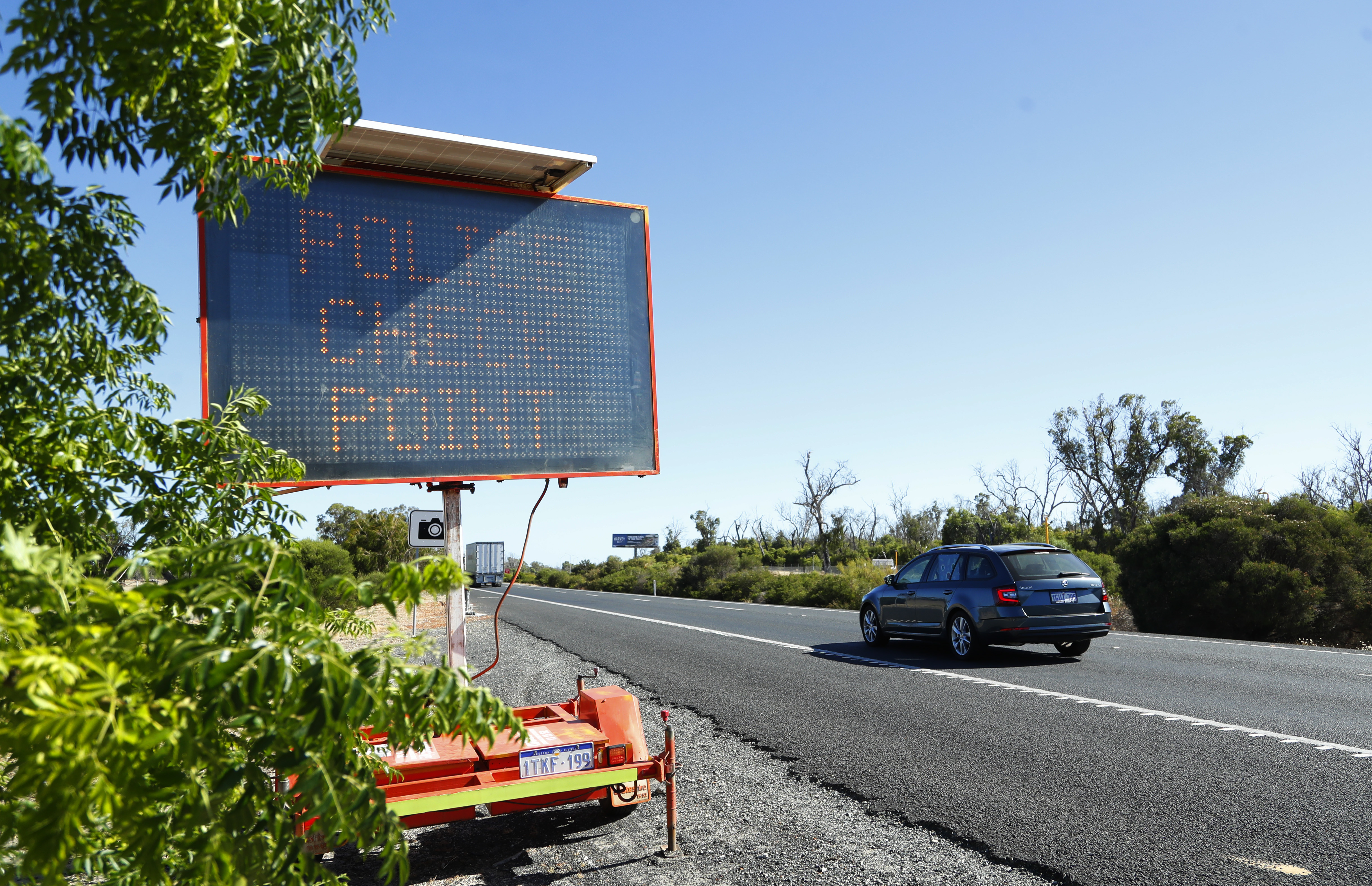
The premier also said tougher testing requirements for truck drivers would come into effect from next week after two COVID-19 positive drivers from NSW made their way into the state.
"From next week, all truckies from high or extreme risk jurisdictions who want to enter WA will have to have returned a negative PCR test undertaken within the prior three days," he said.
"Truck drivers who have not had a test will not be allowed to enter."
Western Australia recorded zero new local coronavirus cases overnight.
Health officials confirmed there are currently 10 active cases in the state, two in hotel quarantine – two diagnosed in WA and two cases diagnosed in NSW – and eight crew members from the MV Ken Hou vessel.
The two NSW truck drivers who were confirmed positive cases on August 27 remain in hotel quarantine and 25 contacts linked to them have returned negative test results and remain in home quarantine.